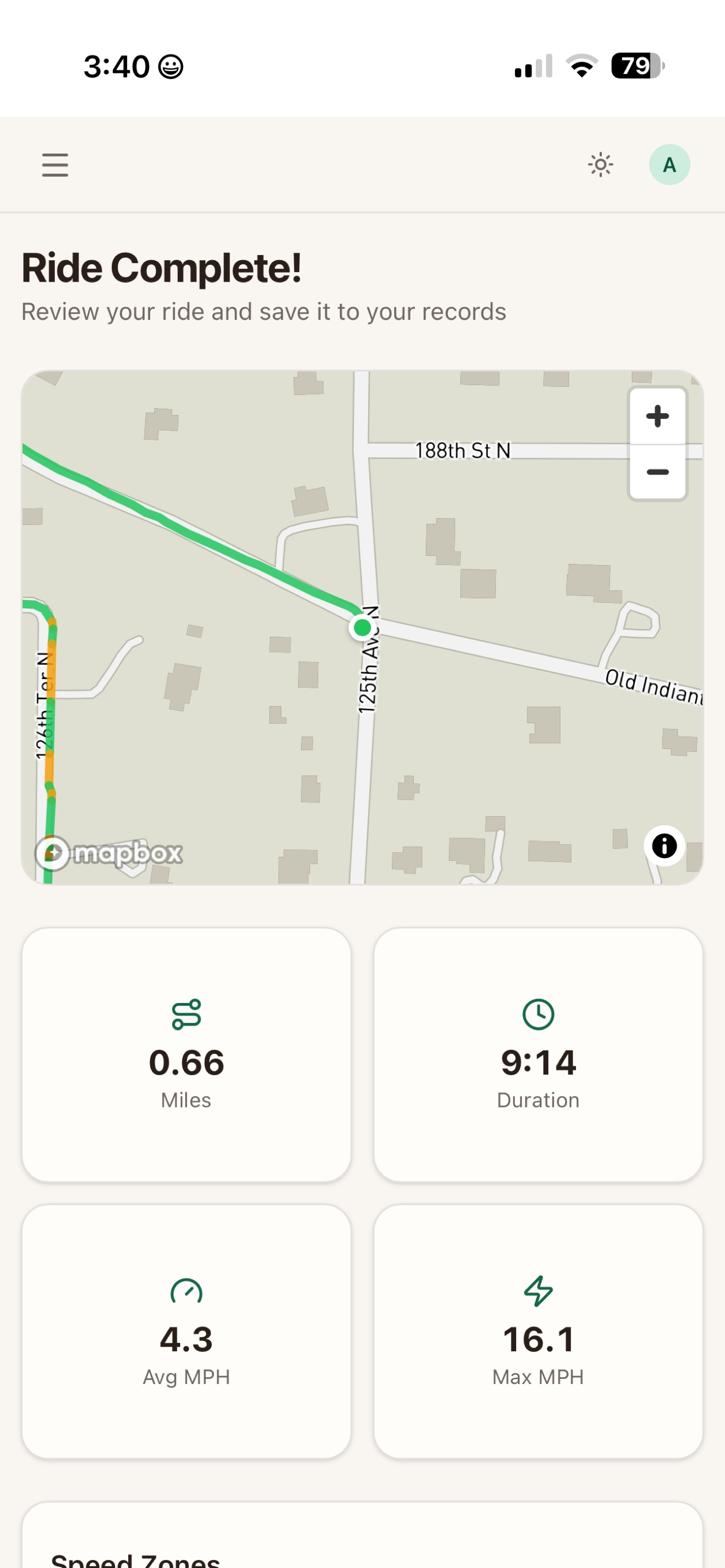
Most horse ride trackers were built by taking a running app and swapping the icon. Every ride ends up looking the same — big distance number, squiggly map, average pace. Fine for a trail loop. Awkward when a 40-minute dressage school gets logged as 0.1 miles, and openly wrong when you’re standing still teaching a young horse to ground-tie.

We rebuilt it. Ride tracking in Proper Strides now understands what kind of work you’re doing and shows the metrics that actually mean something for that work.
Sixteen ride types, one tap

Tap-a-tile picker designed to be used while mounted, with gloves on. Defaults to whatever you rode this horse last time.

HackMap + distance
ConditioningDistance + gaits
Cross CountryDistance + gaits
DressageTime in gait
JumpingDuration + effort
Pattern WorkTime in gait
Barrel RacingTime in gait
CuttingTime in gait
PoloTime in gait
LessonDuration + gaits
LungingDuration only
Hand WalkingDuration only
OtherFlexible

One tap. Big targets. Designed for the moment before you swing a leg over, glove on, phone in a jacket pocket.

Show the numbers that matter for the work you did

A 40-minute dressage school and a 4-mile trail ride are both hard work — but they’re not the same kind of work. Same app, different views. What we hide is as important as what we show.

Trail ride example

Distance leads. Map matters.

  • Route map
  • Distance up top
  • Walk / trot / canter breakdown
  • Elevation & moving time
Dressage school example

Time in gait leads. Map hidden.

  • Time at walk, trot, canter up top
  • Session duration
  • Distance shown as approximate (not the hero)
Groundwork example

Duration leads. Distance hidden.

  • Session duration
  • Notes on what you worked

A 0.1-mile squiggle inside a 60×20 arena is misleading, not useful. And a "distance" number for handler-on-foot groundwork is just GPS noise. When the metric would mislead, we don’t show it.

Time in Gait: how the work actually broke down

Every ride shows how the horse spent his time — how much at walk, how much at trot, how much at canter or faster. For arena work that’s often the whole story; for trail work it’s the fitness picture behind the miles.

Not a fitness-app pace chart. A rider’s vocabulary, on a rider’s ride.

Ride detail showing time in walk, trot, and canter

Indoor arenas, canopied trails, the barn interior — all handled

Under a metal roof. Deep in the woods. In an indoor. In a mountain valley where consumer GPS gets flaky. The tracker holds up. Just as important: it doesn’t invent distance when you’re standing still. If a metric would lie, we don’t show it.

Works in the indoor

Roofed and covered arenas no longer break tracking. Your session logs as time, work, and gait — not as a 0.1-mile embarrassment.

Background & battery-friendly

Lock the phone. Ride. The tracker keeps recording without draining the battery or asking to be babysat.

Distance stays honest

We’d rather show you a shorter distance than a fake one. Phantom-miles from a stationary phone don’t make it onto the ride.

Share My Location. Not fall detection.

Text a private link to someone before you ride out. They watch your live map — no app, no account — and see “safely back” when your ride ends. Hit the emergency button and their page turns red with your last known GPS coordinates.

Fall detection sounds like a horse-safety feature until you think about when you’d need it. In an arena, help is already 20 feet away. Alone on a remote trail, you probably don’t have cell signal — and fall detection can’t call out from a dead zone. It’s silent right when you’d need it most.

We built the safety feature that works when you actually need it: one specific person always knows where you are, and can act if something goes wrong.

Read the whole story →

Equibot chat recognizing training patterns across recent rides

Equibot sees the shape of your rides, not just each one

Because every ride is tagged with what it actually was, Equibot recognizes patterns across your recent sessions. A jump-heavy week. An arena-only stretch with no trail miles. A conditioning block heading into show season.

Ask “how has Apollo been trending?” and get an answer that pulls the picture together. Ask “did we do too many jump schools this week?” and get a real reply instead of a shrug.

Equibot won’t infer soundness or injury risk from ride patterns — anything heading that way routes to your vet. But recovery, variety, and program pacing are fair game.

Anyone who wants their rides told the way they happened

Trail & endurance riders

The map, the miles, and the gait breakdown — the way this style of ride tracking should’ve worked all along.

Arena riders — English & Western

Dressage, jumping, pattern work, cutting — time in gait leads, no misleading distance number.

Groundwork & young-horse trainers

Session duration and notes. Nothing pretending the horse traveled miles when you were standing in one spot.

Program trainers

Track every ride on every horse in the program by type. See who’s getting the balance right and who needs recovery variety.

Boarders sharing with owners

Show owners what their horse actually did today — not just “we rode.”

Rehab & comeback riders

Hand walking, groundwork, easy hacks — each with the right log. Build the return story properly.

Ride tracking is on every plan

Free forever for one horse. Add more horses anytime with a 14-day trial of Core or Plus.

Free
$0/forever
1 horse · all essentials
Plus
$19.99/mo
15 horses · unlimited barns
See full pricing

Frequently asked questions

Does it work in an indoor arena?

Yes. Ride tracking now handles roofed and covered arenas without dropping to zero, and arena ride types lead with time-in-gait rather than distance — because a squiggly line inside a 60×20 arena isn’t a useful metric. The session logs properly whether you were tracking miles or teaching flying changes.

What are “ride types”?

Sixteen tap-a-tile categories that tell the app what kind of work you did — trail, hack, flatwork, dressage, jumping, cross country, pattern work, barrel racing, cutting, polo, lesson, conditioning, groundwork, lunging, hand walking, other. Each one shows different metrics on the ride detail page, because different work asks for different signals.

Why hide the map on some rides?

Because a 0.1-mile squiggle inside an arena misrepresents the work. Arena types (flatwork, dressage, jumping, pattern work, lesson) still record their session — they just lead with time and gait breakdown instead of a map that would give a false impression. Distance is still there if you want it, just not the hero.

Do you track walk / trot / canter automatically?

Yes — every ride shows time in each gait based on the tracker’s reading of the session. We call this Time in Gait. It’s the vocabulary riders actually use, and it’s what tells you how the work broke down.

Can Equibot see my ride history?

Yes. Because every ride is tagged with a ride type, Equibot can talk about the shape of your training — a jump-heavy stretch, an arena-only week, a build toward a competition — and suggest recovery variety when it makes sense. It won’t infer soundness or injury risk from ride patterns; anything heading that way routes to your vet.

Does the battery die if I lock the phone?

No. Ride tracking runs in the background — lock the phone, ride, and the session keeps recording without eating the battery.

Log a ride the way it actually happened.

Free for one horse. 14-day trial on paid plans. Cancel anytime.

Start Free