A bad saddle fit can ruin a good horse.

Most of us only call a saddle fitter once a year — if that. Horses change shape with conditioning, age, and the seasons. By the time you notice the symptoms, your horse has been compensating for weeks.

An AI second opinion, on demand

Photo-based check

Snap your saddle on your horse. Equibot looks at gullet clearance, panel contact, and tree width — and tells you what to watch.

Knows your horse

Equibot knows your horse's breed, build, and ride history. The advice is specific — not generic saddle-fit tips off the internet.

When to call a pro

Equibot tells you when something looks off enough to bring in a professional saddle fitter. It's a triage tool, not a replacement.

Catch fit issues before they become lameness issues

Most fit problems show up first as behavior — girthy, cold-backed, head-tossing, head-shaking at the canter. By the time it's lameness, you've been riding a sore horse for weeks.

Equibot helps you connect the dots earlier. Photo + behavior notes + Equibot's read = a heads-up while there's still time to fix it.
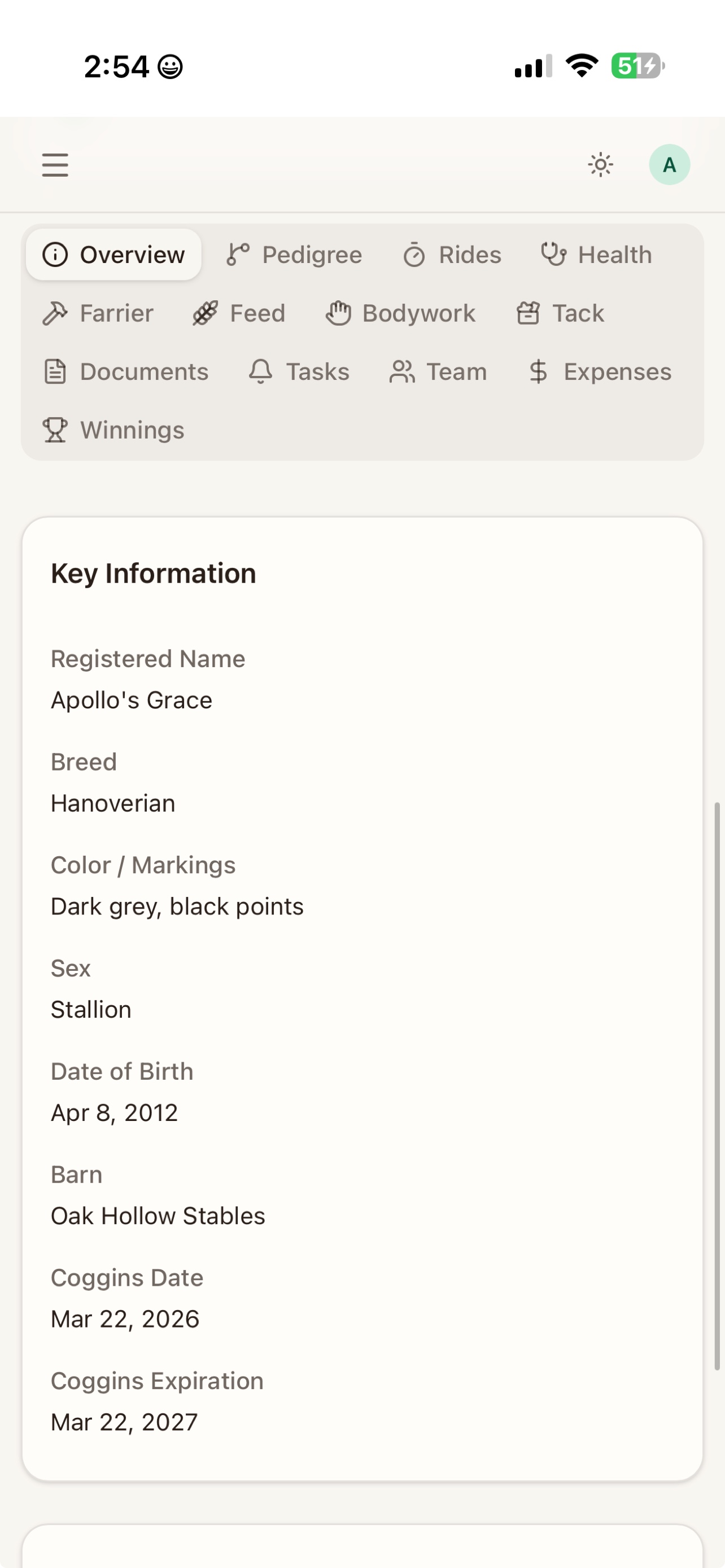
Horse profile with tack and equipment records

Saddle fit, made easier

Equibot is included in every plan

Start free. Upgrade when you need more. No credit card. Cancel anytime.

Free
$0/forever
1 horse · GPS only
Plus
$19.99/mo
75 AI credits / mo
See full pricing

Frequently asked questions

Does Equibot replace a professional saddle fitter?

No. Equibot provides triage guidance based on photos and your horse's history. For actual adjustments, custom flocking, or tree changes you still need a qualified saddle fitter. Equibot helps you spot problems earlier and decide when to call one.

How often should a saddle be checked by a professional fitter?

Most experienced fitters recommend a check every 6 to 12 months, or whenever your horse's shape changes significantly — after a layup, change in fitness, or weight change. Performance issues mid-cycle warrant an earlier check.

What photos does Equibot need for a fit check?

A clear side-on photo of the saddle on your horse, ideally girthed but unridden. A front-on photo showing wither clearance is useful. A brief description of any recent behavior issues helps Equibot give better guidance.

What signs suggest a bad saddle fit?

Common signs include girthiness, cold-backed behavior, head-tossing or head-shaking at the canter, refusing to move forward, white hairs at the wither or back, and uneven or dry patches under the saddle pad after a ride.

Can Proper Strides track which saddle fits which horse?

Yes. Catalog each saddle in your tack inventory and tag which horses it fits. Photos, brand, model, tree width, and saddle fitter notes are all stored per saddle.

Catch fit issues before your horse pays for them.

Snap a photo. Get guidance. Ride better.

Try Equibot Free